Your church is prepared to care for people's spiritual needs. But is it prepared for a medical emergency?
Picture a typical Sunday morning.
The worship team is leading the congregation. Children's ministry is in full swing. The youth are gathering, the greeters are welcoming visitors, and someone is making sure there's enough coffee to keep the congregation awake through the sermon. (Some ministries require more caffeine than others!)
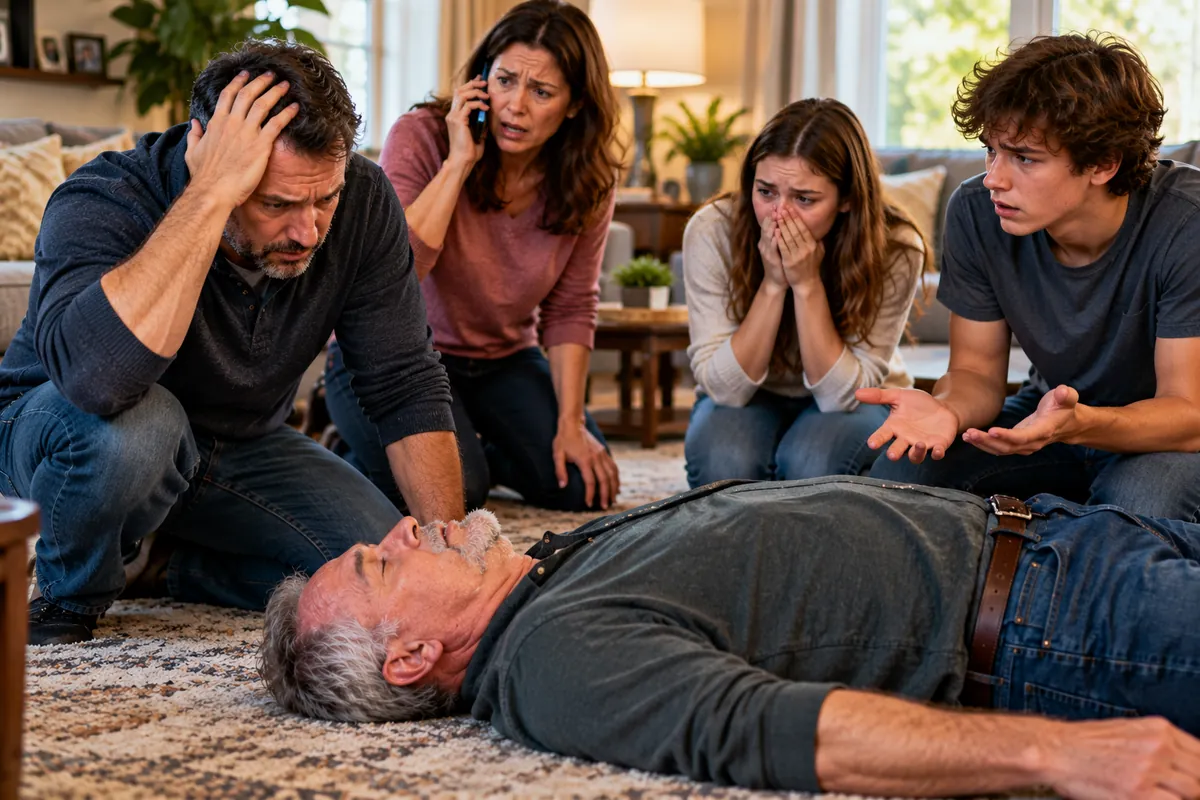
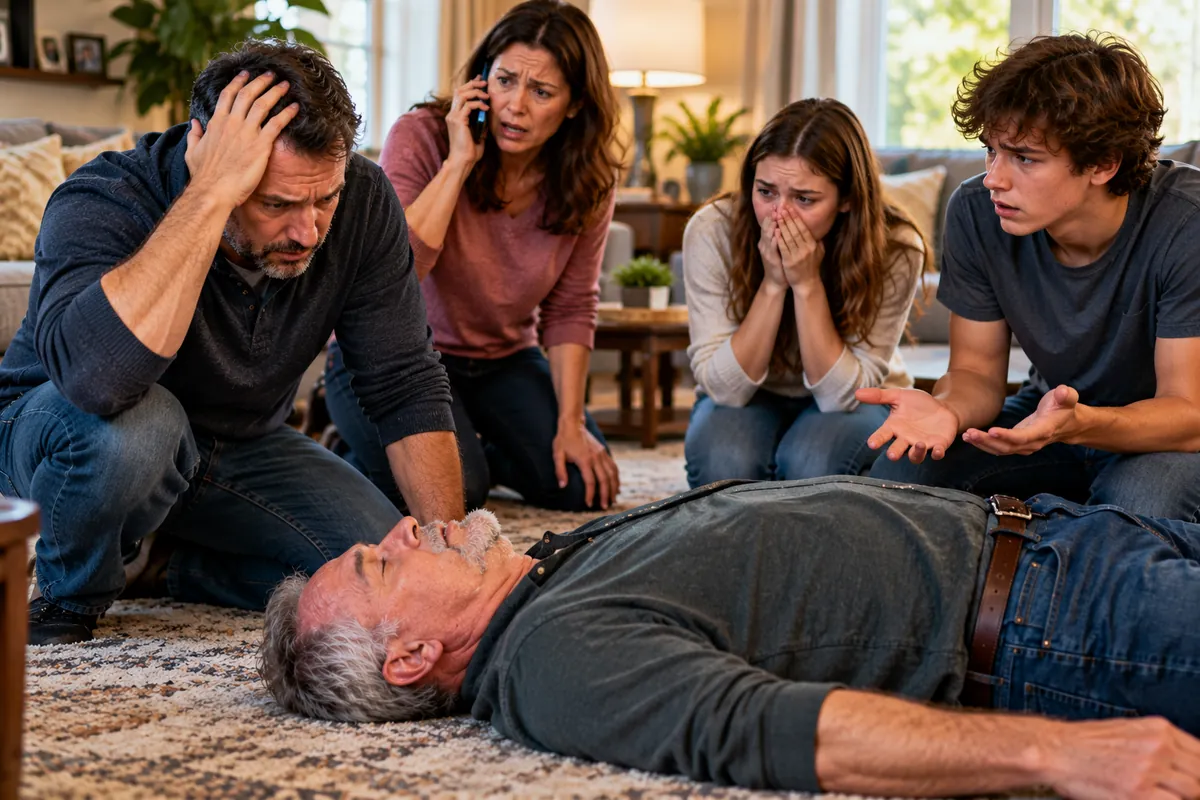
Then, without warning, someone collapses.
It might be a longtime church member, a visiting grandparent, a teenager, or even your pastor.
Would anyone know what to do?
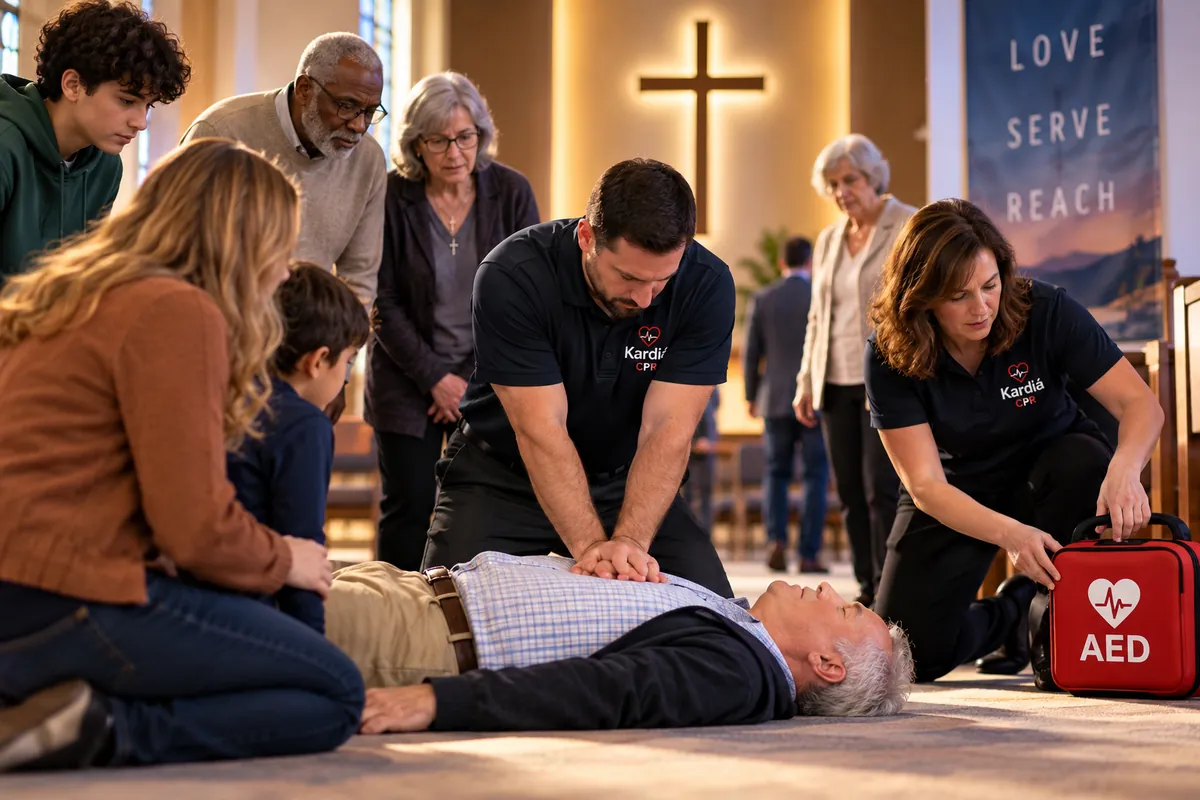
Would someone recognize cardiac arrest? Would someone immediately call 911? Would someone begin CPR while another person retrieves an AED?
Or would everyone stand around, wanting to help but unsure where to begin?
For churches across Oklahoma, CPR and First Aid training isn't simply another item on a safety checklist. It's an opportunity to turn compassion into action.
Faith That Moves Us to Action
In Luke 10:25-37, Jesus tells the familiar parable of the Good Samaritan.
A man is beaten and left injured along the road. Two religious figures pass by without helping. But a Samaritan stops, tends to the man's injuries, and arranges for his continued care.
Jesus concludes by telling His listener to go and show the same kind of mercy.
The lesson isn't specifically about emergency medical training. It's about loving our neighbors through practical, compassionate action, even when helping requires personal sacrifice.
Compassion doesn't stop at recognizing someone's need. It moves us to respond.
James 2:15-17 reinforces the relationship between genuine faith and practical care. James challenges believers who offer comforting words to someone lacking food or clothing but do nothing to meet those physical needs.
The passage teaches that living faith expresses itself through action. It doesn't mean we earn salvation through good deeds.
We are saved by God's grace through faith in Christ, and our lives should increasingly reflect His love for others.
Learning CPR doesn't make someone a better Christian. But being prepared to help someone facing a life-threatening emergency is certainly one practical way to demonstrate love for our neighbors.
And sometimes, loving our neighbors means being ready to act before the ambulance arrives.
Cardiac Arrest Doesn't Check the Church Calendar
According to the American Heart Association's November 2025 fact sheet:
Approximately 350,000 people experience out-of-hospital cardiac arrest annually in the United States.
Approximately 90% of these cardiac arrests are fatal.
Only about 41% of adults experiencing out-of-hospital cardiac arrest receive CPR before emergency medical services arrive.
Immediate CPR can double or even triple someone's chances of survival.
Source: American Heart Association, CPR and Updated Guidelines 2025.
These are national figures, not statistics specific to Oklahoma churches. They illustrate why emergency preparedness matters wherever people gather.
A cardiac arrest can happen during worship, at a fellowship dinner, during a youth retreat, or while volunteers are serving their community.
And when someone's heart stops, waiting for professional responders without beginning CPR can cost precious time.
Calling 911 is essential. But immediate CPR and prompt use of an AED can provide lifesaving care while emergency personnel are on their way.
Every Ministry Has Its Own Emergency Risks
Churches serve people of different ages, backgrounds, and physical abilities. That's part of what makes the church community so special.
It also means emergency preparedness should extend beyond the sanctuary.
Children's Ministry: Protecting Our Little Ones
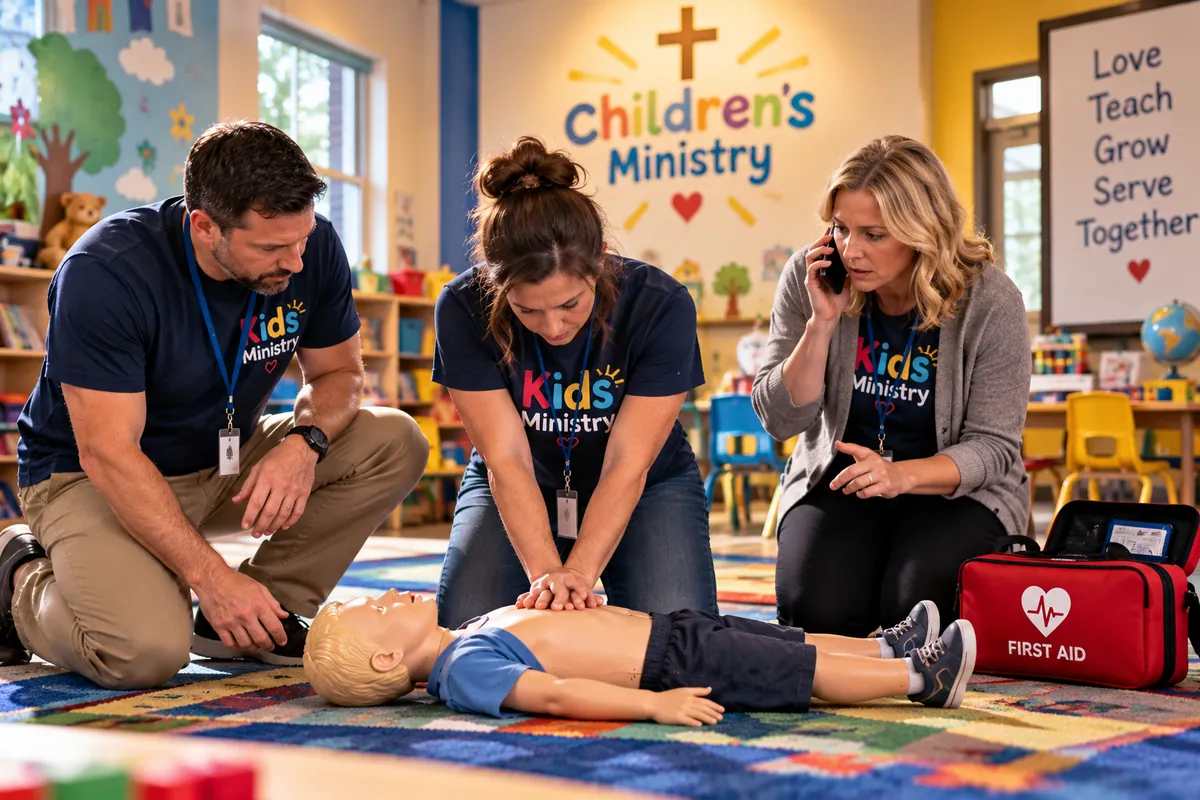
Parents entrust churches with something incredibly precious: their children.
Nursery workers, Sunday school teachers, and children's ministry volunteers should know how to recognize and respond to emergencies involving infants and children.
Consider situations such as:
An infant choking during nursery care.
A toddler becoming unresponsive.
A child experiencing a severe allergic reaction.
A medical emergency during Vacation Bible School.
Children aren't simply smaller adults. CPR techniques, choking responses, and certain emergency considerations differ based on age.
Infant and child CPR training helps ministry workers develop the skills and confidence to respond appropriately.
Oklahoma churches should also determine whether any child care programs they operate are subject to state licensing and training requirements. Not every church nursery is automatically a licensed child care program.
Youth Ministry: Preparing Young People to Help
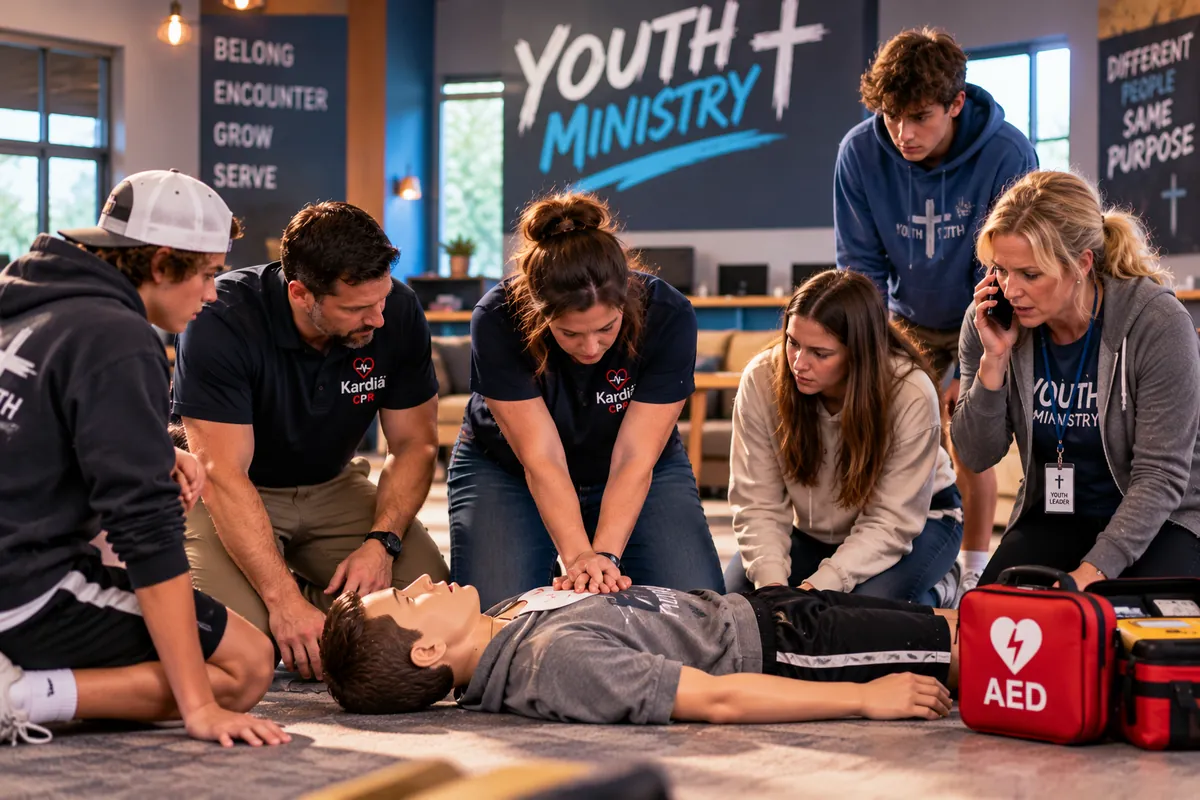
Youth ministry involves far more than Wednesday night gatherings.
Think about summer camps, mission trips, sporting events, lock-ins, retreats, and outdoor activities.
Youth leaders may encounter injuries, heat-related illness, choking, severe allergic reactions, or cardiac emergencies.
CPR and First Aid training can help adult volunteers respond effectively. It can also give teenagers valuable lifesaving skills.
The American Heart Association's 2025 guidelines recognize that children age 12 and older can be taught effective CPR and defibrillation skills.
What if your youth ministry didn't just teach teenagers about serving others, but also equipped them with practical skills to help save a life?
That's a lesson they can carry well beyond their church years.
Senior Adult Ministry: Caring for Those Who Have Cared for Us
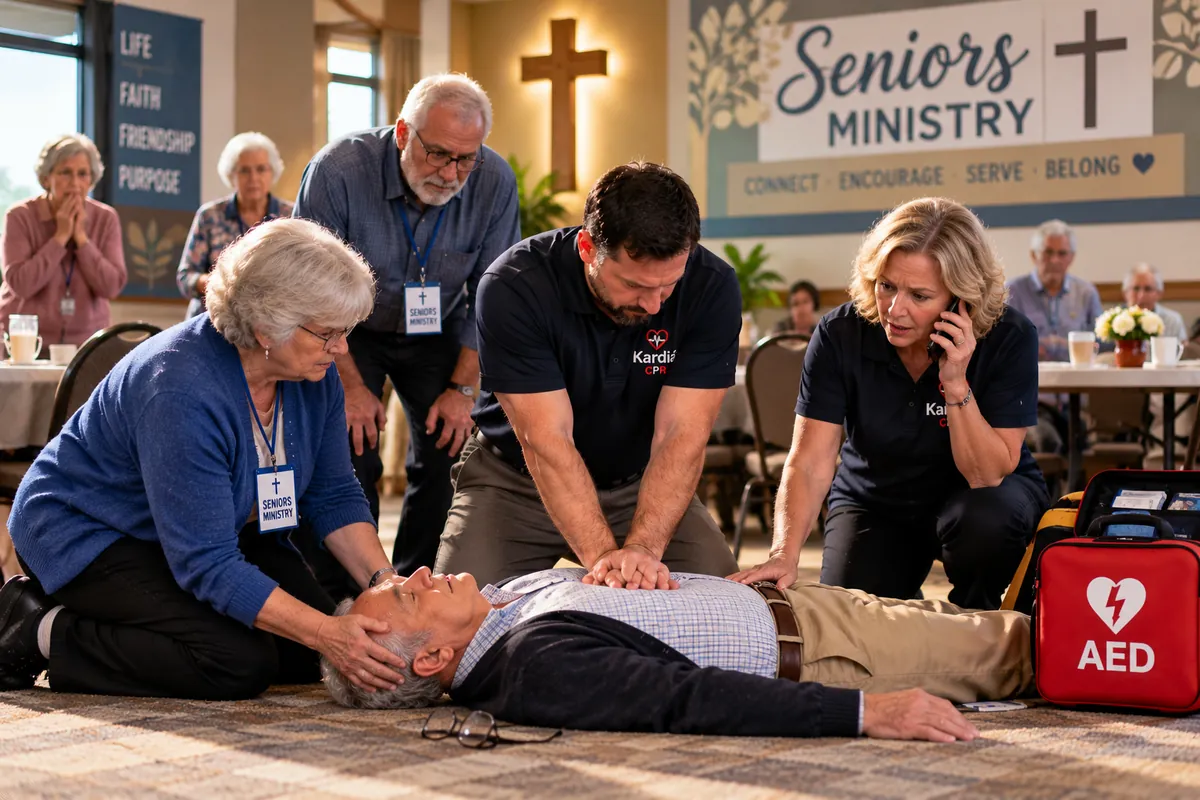
Senior adult ministries are an important part of many Oklahoma churches.
From Sunday school classes and Bible studies to fellowship meals and community outings, churches provide connection, encouragement, and spiritual support.
They should also consider how volunteers would respond if someone experienced a medical emergency.
What happens if a senior adult collapses during a fellowship meal? What if someone becomes unresponsive during a church outing?
Having trained volunteers, an accessible AED, and a practiced emergency plan can make a meaningful difference.
Caring for our senior adults means considering both their spiritual and physical well-being.
Outreach Ministries: Loving Our Neighbors Beyond the Church Walls
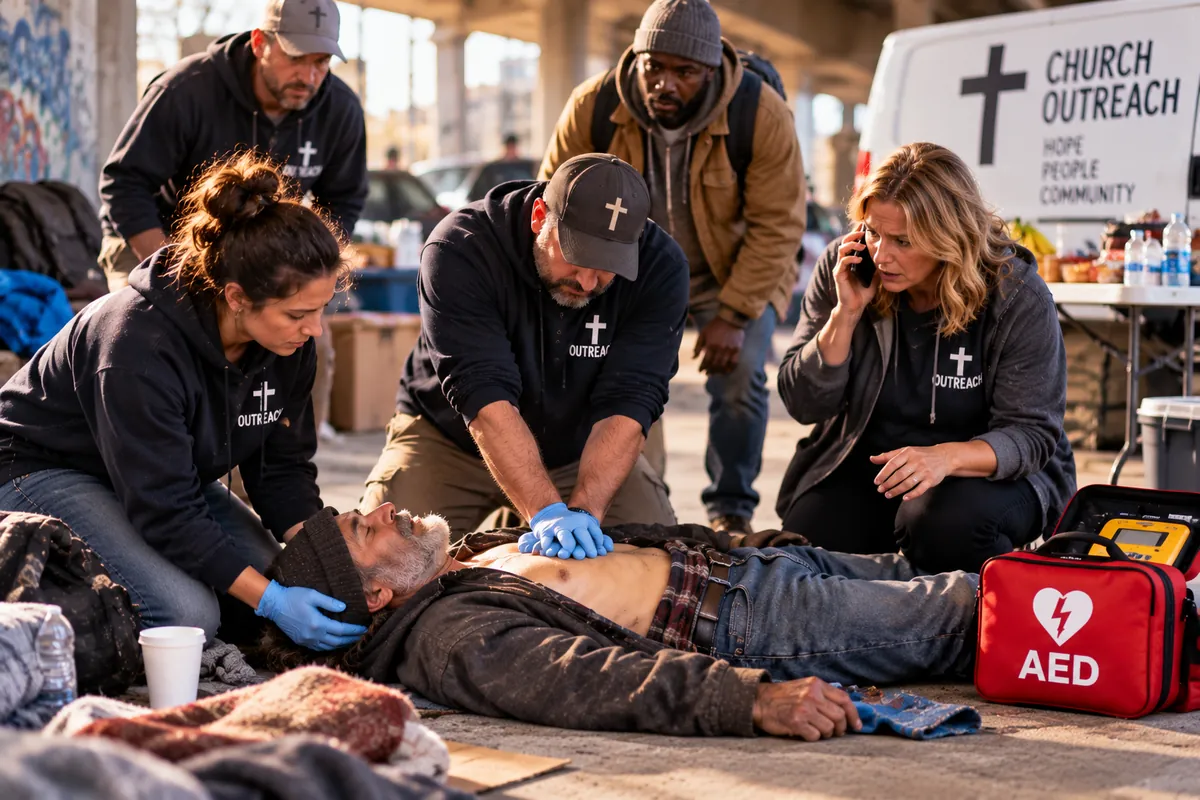
Some of the most meaningful ministry happens outside the church building.
Homeless outreach, food distribution, community meals, clothing ministries, disaster relief, and mission projects allow congregations to demonstrate Christ's love through service.
But these environments can also present medical emergencies.
A volunteer serving meals may encounter someone choking. A person attending an outdoor outreach may experience heat illness. Someone receiving assistance may suddenly become unresponsive.
First Aid, CPR, and AED training can help outreach teams respond while emergency services are contacted.
In Galatians 6:10, Paul encourages believers to do good to others as they have opportunity. In its context, the passage calls Christians to persevere in doing good, with particular attention to fellow believers, while extending care to all people.
That's an important reminder for outreach ministries.
Our compassion shouldn't end at the church doors, and neither should our preparedness.
Is CPR Training Required for Oklahoma Churches?
This is where we need to distinguish between legal requirements and wise preparation.
There is no verified blanket Oklahoma requirement establishing that every church must certify all its pastors, ushers, greeters, or volunteers in CPR.
However, specific church-operated programs may have additional requirements depending on their activities, licensing status, and applicable regulations.
For example, an Oklahoma church operating a licensed child care program should review the Oklahoma child care licensing requirements for CPR and First Aid training.
Churches should also evaluate their insurance requirements, facility policies, and any applicable program-specific rules.
Even when CPR training isn't legally required, that doesn't mean it isn't needed.
The better question may be whether your church is comfortable having no trained responders available when a medical emergency occurs.
Does Your Church Have an AED, and Does Anyone Know How to Use It?
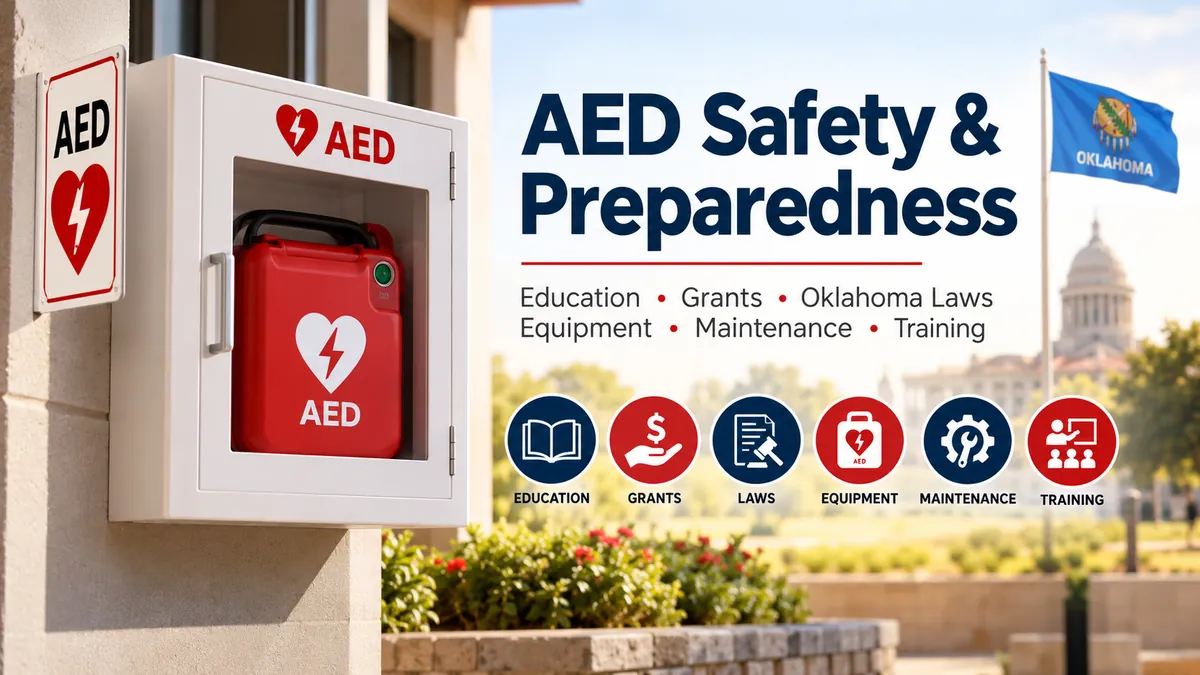
An Automated External Defibrillator (AED) is designed to analyze a person's heart rhythm and deliver a shock when appropriate.
AEDs provide voice instructions to guide rescuers, but training helps people respond more confidently and efficiently.
Imagine having an AED mounted in the church hallway, but nobody knows where it is, who should retrieve it, or what to do when someone collapses.
That's a little like having a fire extinguisher hidden in a closet and hoping someone remembers where it is when the kitchen catches fire.
Equipment is important. Knowing how to use it is just as important.
Church leaders should consider whether their AEDs are accessible, properly maintained, and included in a practiced emergency response plan.
A Cardiac Emergency Response Plan: More Than Just CPR Training
The American Heart Association promotes Cardiac Emergency Response Plans (CERPs) to help organizations establish a coordinated response to sudden cardiac arrest.
For a church, an effective plan should address:
Recognizing an emergency: Volunteers know how to identify a person who is unresponsive and not breathing normally.
Calling for help: Someone immediately activates 911 and alerts designated responders.
Beginning CPR: Trained individuals start CPR without unnecessary delay.
Locating and using an AED: Volunteers know where the device is and how to retrieve and use it promptly.
Coordinating the response: Staff and volunteers understand their responsibilities and practice the plan.
Churches should consider their sanctuaries, classrooms, fellowship halls, gyms, parking lots, and off-site ministry locations when developing emergency procedures.
A plan sitting in a binder is a starting point.
A plan that people understand, practice, and can put into action is what matters.
What About Oklahoma's Good Samaritan Law?
One concern that sometimes prevents people from helping is the fear of being sued.
Oklahoma has Good Samaritan protections under Title 76, Section 5, and separate statutory provisions addressing AED-related emergency care under Section 5A.
These laws provide protections in specified circumstances, but they are not unlimited guarantees against liability.
The application of those protections depends on the facts, including the nature of the assistance and the statutory conditions.
Churches should understand the applicable law and seek appropriate guidance when establishing emergency response policies.
Fear shouldn't keep someone from learning lifesaving skills. Training can help volunteers understand how to respond appropriately and within their level of training.
Your Church Doesn't Have to Figure This Out Alone
At Kardiá CPR, we understand that churches have different needs, schedules, budgets, and ministry environments.
A small rural congregation may need a different training approach than a large church with multiple services, extensive children's programs, and a dedicated security team.
That's why we bring hands-on CPR, First Aid, and AED training directly to churches throughout Oklahoma.
Training can be tailored to the needs of pastors, ministry leaders, children's and youth volunteers, senior adult ministry teams, greeters, ushers, security personnel, and outreach volunteers.
Kardiá CPR can also consult with church leadership to help develop a practical Cardiac Emergency Response Plan.
Our goal isn't simply to help volunteers receive a certification card.
It's to help them develop the knowledge, practical skills, and confidence to act when someone needs them most.
A Final Question for Oklahoma Pastors and Church Leaders
Churches spend countless hours preparing for Sunday services.
We prepare sermons, rehearse worship music, organize children's lessons, coordinate volunteers, and make sure everyone feels welcome.
But how much time have we spent preparing for the moment someone suddenly needs emergency medical help?
What if the person who collapses is a child in your nursery?
A teenager at youth camp?
A senior adult who has faithfully served your church for decades?
Someone experiencing homelessness who came to your outreach ministry looking for help?
Or even your own spouse, parent, or child?
We pray for those in need. We trust God. And we recognize that we cannot control every outcome.
But faith and preparation are not enemies.
We can trust God while also taking responsible steps to care for the people He places in our lives.
The Good Samaritan didn't simply recognize a hurting person. He stopped and helped.
What if our churches were prepared to do the same?
Let Kardiá CPR Help Prepare Your Church
Whether your congregation needs CPR and First Aid certification, AED training, or assistance developing a Cardiac Emergency Response Plan, Kardiá CPR is ready to help.
We offer hands-on training for Oklahoma churches and ministry teams, with on-site group classes designed around your congregation's needs.
Don't wait until an emergency to discover whether your church is prepared.
Contact Kardiá CPR to discuss church CPR training and emergency preparedness.
Because caring for your congregation is more than something you preach.
It's something you put into action.
Kardiá CPR. Life Is in Your Hands.