"I owe Denny my life. Literally."
Damar Hamlin, describing the athletic trainer who performed CPR on him.
You may never need to perform CPR at work. But if that day comes, the people around you won't care whether training was required by law. They'll be counting on someone who knows what to do.
Your employees know what to do when the fire alarm sounds. But what happens when someone's heart suddenly stops?
Imagine an ordinary workday at your Oklahoma business.
An employee suddenly collapses in the warehouse. A customer becomes unresponsive in your store. A coworker collapses at their desk.
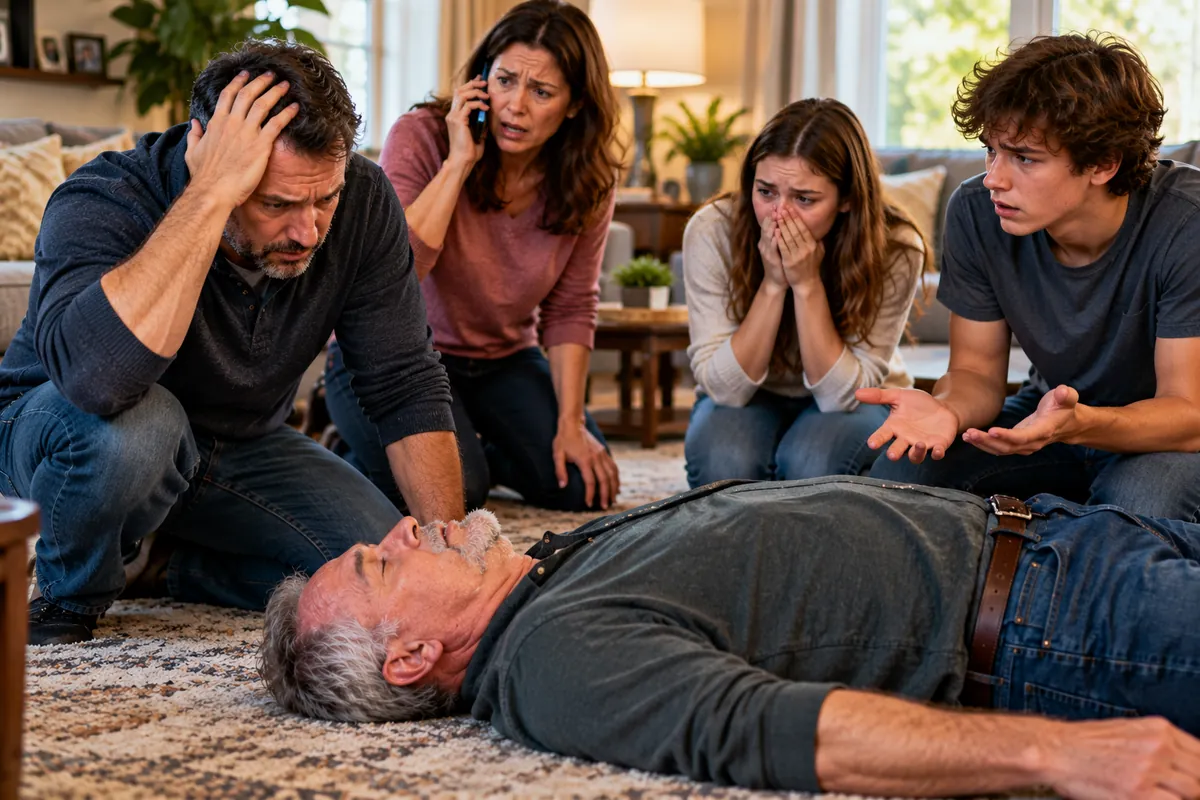
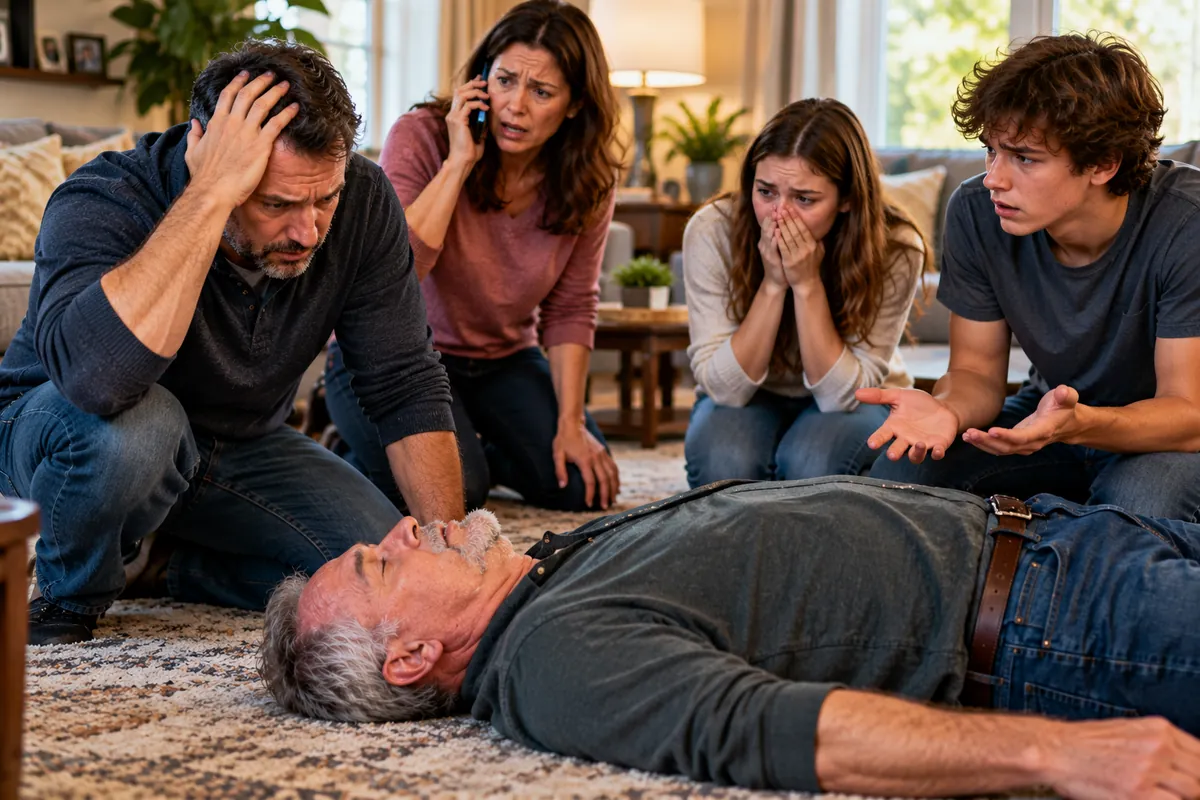
Someone calls 911. Everyone waits for the ambulance.
But here's the questions:
What happens during those critical minutes before emergency responders arrive?
Would your employees know what to do?
Cardiac arrest doesn't wait until you're off the clock
According to theAmerican Heart Association, approximately 10,000 cardiac arrests occur in U.S. workplaces each year. The organization also reports that about half of U.S. workers cannot locate an AED at work (cpr.heart.org).
There are 10,000 estimated U.S. workplace cardiac arrests annually. Approximately 50% of workers are unable to locate a workplace AED. American Heart Association workplace safety statistics. National estimates, not Oklahoma-specific figures.
A heart attack occurs when blood flow to part of the heart is blocked. Cardiac arrest occurs when the heart suddenly stops pumping blood effectively. A heart attack can lead to cardiac arrest, but they are not interchangeable.
And cardiac arrest can happen in almost any workplace.
Which Oklahoma businesses should consider CPR and AED training?
Whether your business operates in Oklahoma City, Tulsa, Edmond, Norman, or a rural community, your emergency response plan should reflect your employees, customers, workplace hazards, and access to emergency medical services.
Business offices and professional workplaces: A cardiac emergency can happen during a meeting, at a desk, or in a reception area. Employees should know how to recognize cardiac arrest, call 911, begin CPR, and locate an AED.
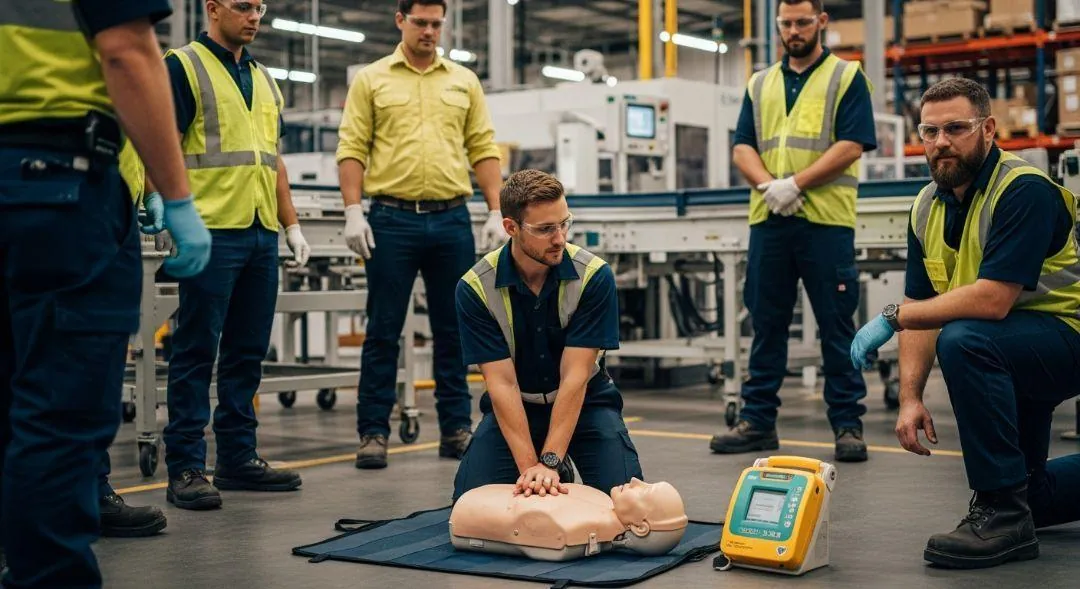
Warehouses, manufacturing, and distribution centers: Large facilities, machinery, physical labor, and multiple work areas make it especially important to consider how quickly trained responders and AEDs can reach someone.
Retail stores, restaurants, and hospitality businesses: Your emergency response plan should protect more than employees. Customers and visitors may also need immediate assistance.
Gyms, fitness centers, and recreational facilities: Physical activity makes having an accessible AED and trained staff especially important. Employees should be prepared to respond when a participant suddenly collapses.
Oil fields, construction sites, and remote operations: For Oklahoma's oil and gas industry and other remote worksites, distance from emergency medical services makes planning particularly important. Employers should assess access to emergency responders, first-aid personnel, and equipment.
These are practical workplace risk considerations, not claims that every industry has the same cardiac arrest rate. OSHA specifically encourages employers to assess workplace hazards and consider AED availability as part of emergency preparedness (Occupational Safety and Health Administration).
The difference between waiting for help and being prepared.
When someone experiences cardiac arrest, every minute matters.
Without a trained response
Employees may recognize that something is wrong but not know how to respond.
CPR may be delayed while everyone waits for emergency responders.
An AED may be unavailable, difficult to locate, or left unused.
With a trained response
Employees recognize cardiac arrest and immediately activate 911.
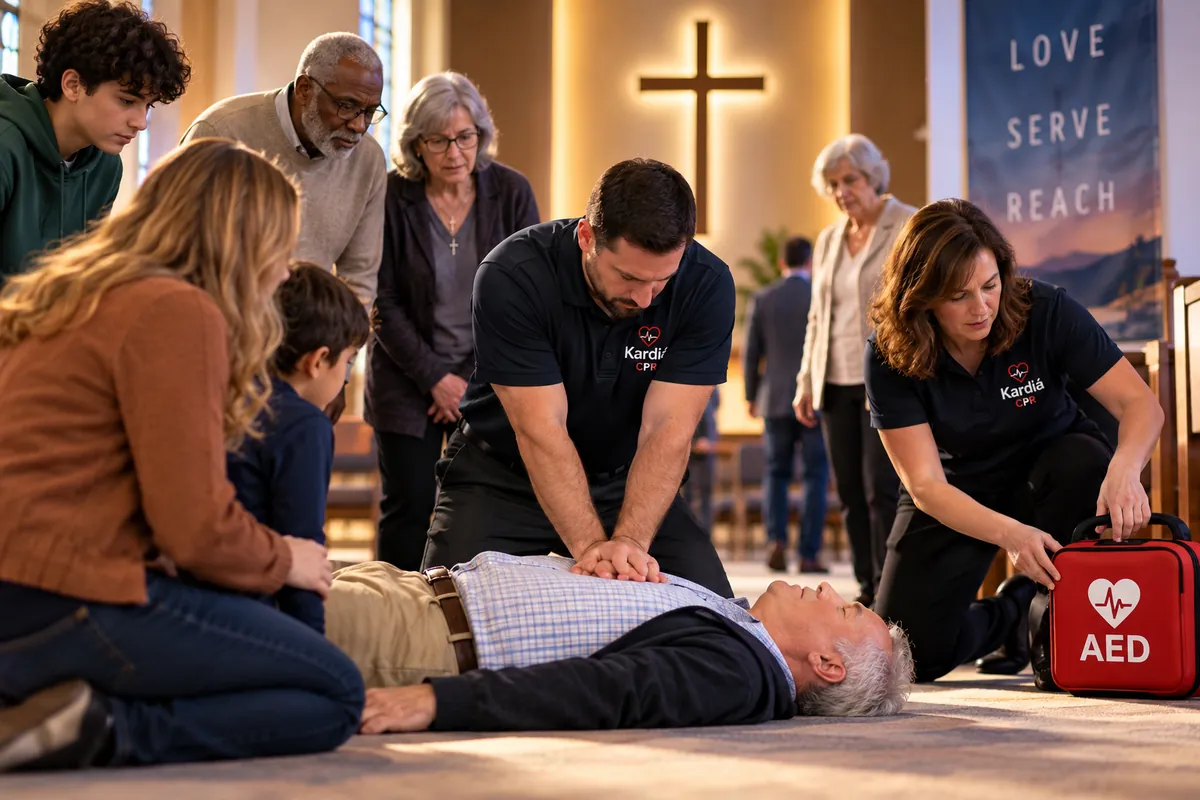
Someone starts CPR while another retrieves the AED.
The team follows AED instructions and continues care until responders take over.
The American Heart Association reports thatimmediate CPR can double or triple a person's chance of surviving cardiac arrest. OSHA also reports that survival chances decline approximately 7 to 10% per minute when immediate CPR or defibrillation is not provided. These figures are population-level estimates, not guarantees of an individual outcome.
An AED can analyze the heart's rhythm and deliver a shock when appropriate. Combined with CPR, early AED use gives a person a better opportunity to survive.
Calling 911 is essential. But what happens before the ambulance arrives can make a lifesaving difference.
Is CPR training or an AED required for Oklahoma businesses?
Not every Oklahoma business is legally required to have an AED or provide CPR certification to every employee. However, certain workplace conditions and occupational safety standards can require trained first-aid personnel.
Under OSHA's 29 CFR 1910.151, employers must provide adequately trained first-aid personnel when appropriate medical services are not available in near proximity. Additional OSHA standards require CPR training for certain hazardous operations (Occupational Safety and Health Administration).
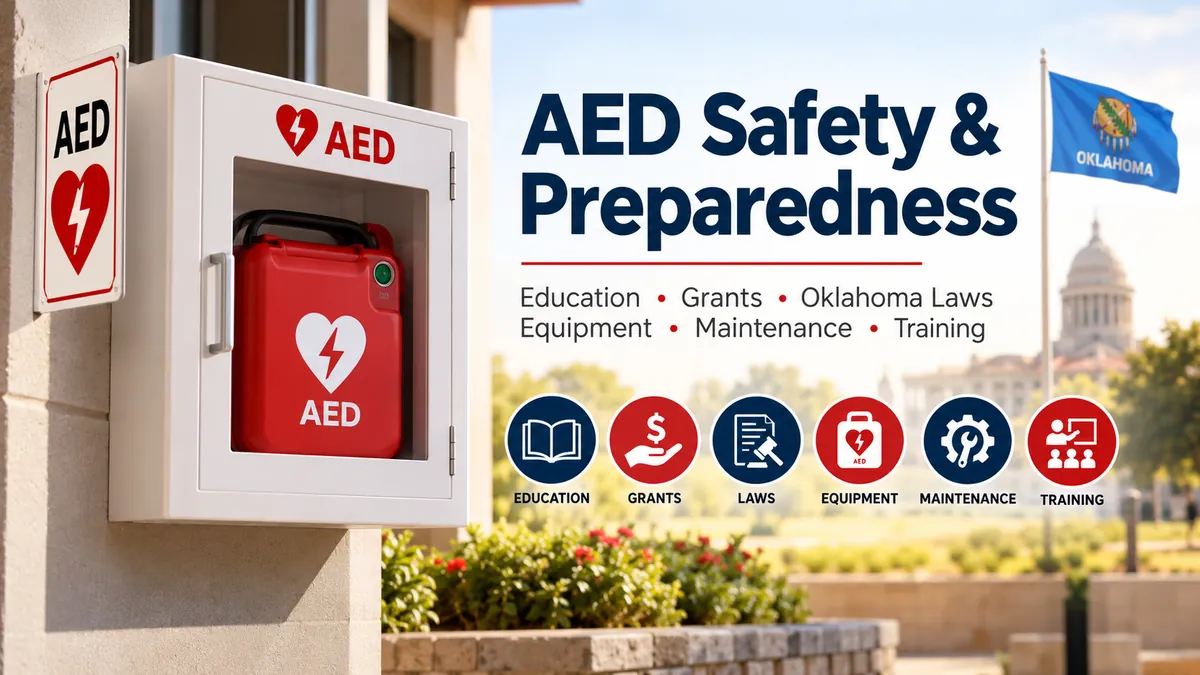
Oklahoma also has laws addressing AED use and civil liability. Under 76 O.S. § 5A, AED owners must communicate device locations to the appropriate first responders. The statute also provides certain liability protections, subject to its conditions and exceptions (Oklahoma Legislature).
The bigger question isn't simply whether your business is required to provide training. It's whether your business is prepared when an emergency happens.
Building a workplace that is ready to respond
You don't need every employee to become a medical professional. But you do need a plan.
Consider these practical steps:
Train employees in CPR, First Aid, and AED use. Aim to have trained personnel available during every shift and in different areas of your facility.
Evaluate AED access.Consider your building size, layout, number of employees, and how quickly someone could retrieve the device.
Develop a Cardiac Emergency Response Plan (CERP). Establish who calls 911, who starts CPR, who retrieves the AED, and how emergency responders are directed to the patient.
Practice your response. Training, refresher sessions, and emergency drills help employees understand their responsibilities.
The American Heart Association provides resources for businesses to develop Cardiac Emergency Response Plans (CPR.heart.org).
What if the person who needs CPR is someone you know?
It's easy to think cardiac arrest is something that happens somewhere else, to someone else.
But what if it's your employee? Your customer? A client sitting across the desk?
What if it's a family member visiting your workplace?
Or consider this:What if you're the person who collapses? Would you want your coworkers to know what to do?
The importance of CPR training doesn't end when employees clock out. The American Heart Association reports that roughly three out of four out-of-hospital cardiac arrests happen at home. The training you provide employees could one day help them respond to an emergency involving someone they love.
Don't wait for an emergency to discover you're unprepared
As an Oklahoma business owner or manager, you make decisions every day to protect your employees, customers, and operations.
CPR training deserves a place in those decisions.
AtKardiá CPR, we provide hands-on CPR, First Aid, BLS, and AED training for businesses throughout Oklahoma. We can bring training to your workplace and help you explore an American Heart Association Cardiac Emergency Response Plan suited to your organization.
Whether you manage an office with five employees, a busy retail location, or a warehouse with multiple shifts, preparedness begins with a conversation.
Your employees depend on you to provide a safe workplace. Your customers trust you with their safety. And one day, you may depend on someone around you to know CPR.
Don't wait until someone's life is in your hands to learn what to do.
Contact Kardiá CPR today to schedule workplace CPR and AED training or discuss a Cardiac Emergency Response Plan for your Oklahoma business.
Ask About Workplace CPR Training and CERP Consultation
Life Is in Your Hands.
Source verification and editorial notes
Source | What it verifies |
|---|---|
Estimated 10,000 annual workplace cardiac arrests; employee AED awareness | |
Difference between heart attacks and cardiac arrest | |
Federal workplace first-aid requirements | |
AED benefits, workplace guidance, and response timing | |
Oklahoma AED liability protections and location notification provisions | |
CERP guidance for businesses |